Gantt
GanttReview & compare
Open someone else’s schedule, whatever format it arrived in, pull out the activities in your scope, and see every one that moved, stretched, shrank or disappeared between revisions.
Whoever signs off on the schedule carries it for the length of the job. GanttAI exists so that plan can be built from whatever the project already knows, checked before it goes out, and read by everyone who has to work to it.
GanttAI opens the schedule you were handed, finds the work that belongs to you, tells you what the last revision did to it, and works out the crew behind the dates. AI trained on how projects are actually delivered, not on generic project-management theory.
Open someone else’s schedule, whatever format it arrived in, pull out the activities in your scope, and see every one that moved, stretched, shrank or disappeared between revisions.
Manload the file: set the hours behind each scope and GanttAI works out the crew every activity needs, day by day, against the people you actually have.
Every trade on every project in one picture, by day, week, month, quarter or year, against the crew sizes you actually have. See where you are committed before you bid the next job.
Ask anything about the schedule in plain English and get an answer you can act on, with the working file to go with it. It shows the reasoning behind the answer, so you can check it rather than trust it.
A project is dozens of separate companies with no shared system between them, and the one artefact coordinating all of it is the schedule: when money moves, when crews mobilize, who is liable when something slips. It’s still written by hand, by a few specialists, in tools designed decades ago. Everything downstream inherits that.
You did not write it and you are still accountable to it. Every revision should arrive with its own answer: what moved in your scope, what that does to your dates, and how many people it now takes.
A plan only coordinates people who understand it, and today that is a handful per project. Ask in plain English, get an answer out of a 4,000-line file. The asset was never the file. It’s everyone knowing the same thing.
The industry runs on P6, MPP, Excel and PDFs and won’t stop because a tool asked it to. We read and write what companies already send each other: no new process, no retraining, no waiting for every trade to join one platform.
Each part stands on its own. Together they change how many people on a project actually understand the plan they are working to, which is the part that matters.
Everything else is a trade-off we are willing to argue about. These three are not.
Schedules, drawings and contracts are private and never exposed. Nothing is pooled with other customers, and nothing trains anyone else's model. A competitor can’t benefit from your job because you ran it through us.
Every activity carries a confidence value and shows the reasoning behind its date. If the model isn’t sure, it says so. You should never have to take an output on faith, or defend a number in a meeting you can’t explain.
Construction software has a long tradition of asking the job to change shape around it. We meet you where you are: the formats you already send, the process you already run, the words you already use. If using GanttAI means retraining a team, we have built the wrong thing.

Founder
“An engineer and PMP with 14 years on site, most of it running schedules on portfolios worth billions. I have built them by hand under deadline, defended them in the OAC meeting, and watched them go stale the week after issue. GanttAI is the tool I wanted on those jobs: a plan the whole project can read, not a document a handful of people can.”
We build GanttAI out of Toronto and test it on jobsites across North America. Built by people who have spent their lives on site.
What we learn from the schedules that come through GanttAI, and from the people who have to work to them.

Five shifts that keep coming up in conversations with specialty contractors, and where the people having those conversations tend to gather.
Read it →6 min read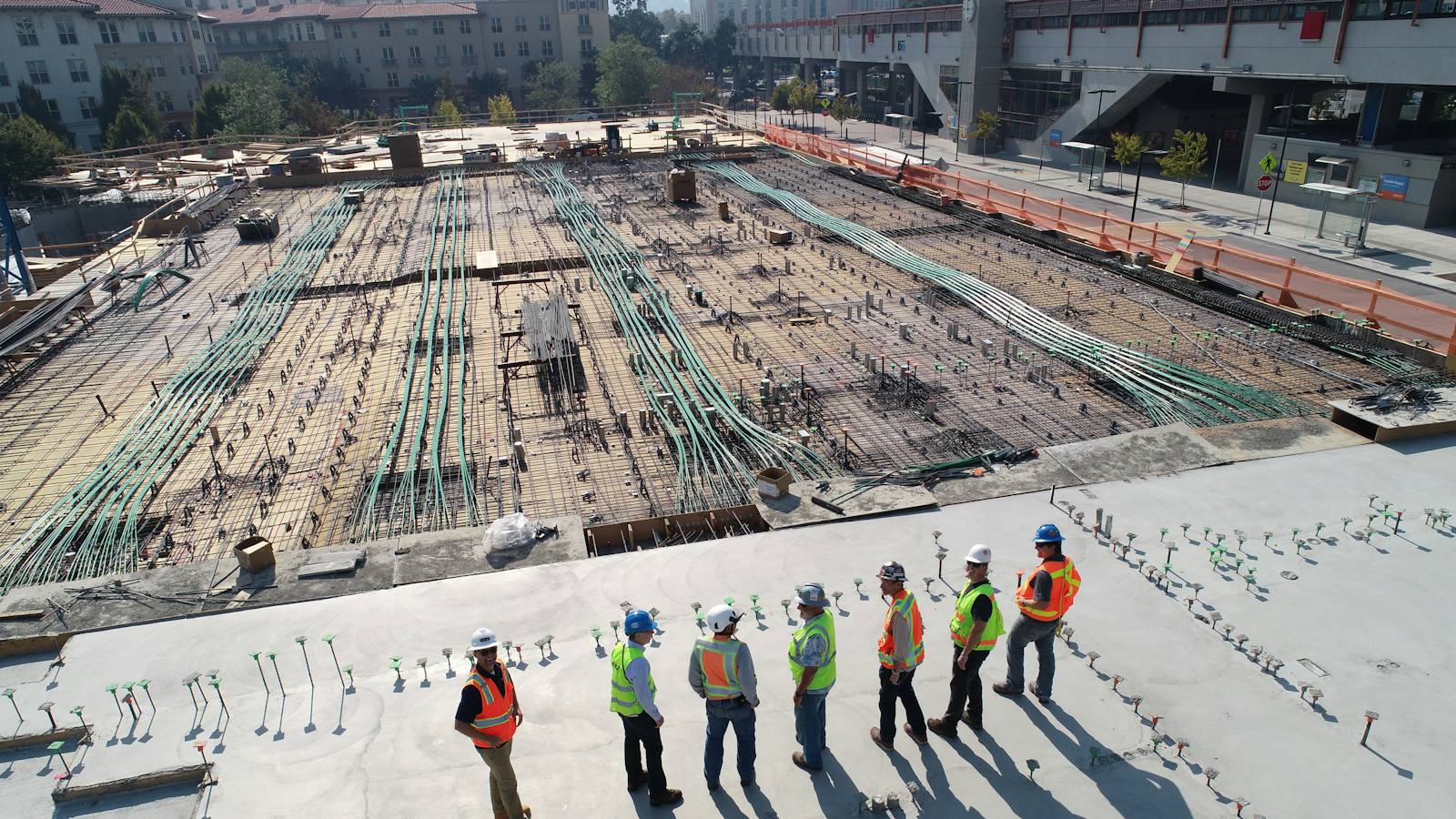
Dates are the GC's. Headcount is yours. Turning one into the other takes two numbers per scope and the discipline to keep them honest.
Read it →9 min read
Schedule review, comparing revisions, crew planning, the portfolio view and the agent: five capabilities, one workflow, and what each is for.
Read it →7 min readSmall team, real customers, no layer between the people writing the code and the people running jobs with it. Both roles are part-time and based in the Greater Toronto Area. If neither fits but the problem does, write anyway.
You’d be the first commercial hire, which means the job is to find out who needs this most and why, not to work a script someone handed you. Talking to general contractors and trades, sitting in on demos, and bringing back the objections that change what we build next.
Construction schedules are messy, inconsistent and rarely labelled, and the interesting work is turning them into something a model can actually learn from. You’d own extraction quality, duration and logic prediction, and the confidence values users see on every date.